Saturday, 21 July 2012


Takeaways from Racial Harmony Week

I love Racial Harmony Week!!!

I think that our teachers have put in so much effort to make it a wonderful experience for us. I have learnt so much about other races than ever in my life. I learned about other races' costumes, food, musical instruments and traditional games which bonded the different races together.

I thought about the racial riots back in 1964. The video that Mdm Nora showed us was so scary. I hope nothing like that happens in Singapore again. We have to work together to achieve progress for Singapore. Racial Harmony is very important! No more fighting and unfair treatment just because someone is from a different race than our own race. We must unite as we are all Singaporeans and living in the same country.

I made more Malay and Indian friends in the week. Siti is such a nice person to talk to. She said that she would invite me over to her house one day to try some kueh made by her mother. Bala and Nisha are also very friendly! They are so funny and love to crack jokes with me. I love their Indian roti prata too!

:)

Friday, 20 July 2012


5th Day of Racial Harmony Week: 


It's a pity that it's the last day of Racial Harmony Week for us P4s! I really enjoyed myself thoroughly throughout the week. So sad. :(

Racial Harmony Week ended well today with many of us playing many interesting traditional games which I have never ever played before! In our groups, we went to the basketball court to try out 4 different game stations-Bola Tin, Kuti Kuti, Goli Panjang and Five Stones. Mdm Nora taught us how to play them and Miss Chong came to help as well.

Mdm Nora told us that those games were actually played often by our parents and grandparents when they were young.  Although some games originate from different races, those games actually bonded the different races together as they come together and play. For example, most games such as Goli Panjang originate from the Malays but other races play the game together as well.

Why don't we get to play such games these days?! I feel that they are fun as we can play them with our friends. It is also very fun to compete against my friends in the games to see who is the winner and the best in using hands and feet. We need such games other than our Wii!

I competed against my best friend, QiQi, in Kuti Kuti and  I won!! Teehee!! The kuti kutis were so colourful. The cool thing was that we could borrow games like Capteh and Five Stones to play during recess as well. I won QiQi in both Capteh and Five Stones as well! I felt so happy as she always beat me in computer games. Finally I can beat her.

Here are the colourful kuti kuti:

My favourite game is Bola Tin as we get to throw balls at the metal tins and we can compete against another group. It is a really simple game. In Malay, "bola" means "ball".  Our group competed against Soo Kee's and Bala's group and won! We just had to knock down the metal tins, work together as a group to hit the ball at all the members from the other group so that they are 'dead'. Such an exciting game!

I decided to research a bit on Capteh as I like the feathered part of it:


Guess what! It actually comes from China in 5th century BC. And other countries like Vietnam, India and Korea play it too! It was actually In Singapore, the name 'capteh' is thought to be either Malay or Hokkien in origin. Well who knows?! I guess it's a game that all races can play together!

Fun fun fun! I wish we could have more time to play with the games. Today, I learnt that games are very helpful in bonding many different races together. 

Thursday, 19 July 2012


4th Day of Racial Harmony Week: Music


Today during Social Studies class, Mdm Nora showed us many instruments and even bought some smaller ones to class! It was so interesting! I haven't seen most of it at all! So, I got so curious by the traditional musical instruments and I went back to find out more. Besides what were introduced to us during our  lesson, I went to research on an additional instrument to each race. It is so enriching to know that we have such a rich culture in Singapore. Now, whenever I attend any Muslim celebration with my parents, I can relate to the excitement of them playing the instruments. And last year, during Deepavali, my family was invited to a party where they performed using the Dhol. I was so amazed that I actually asked them to teach me to use that instrument. My goodness, I had a ball! So much fun!

If only we have the opportunity to experience the instruments during music lesson. I think we should all suggest to our music teacher to teach us cultural musical instruments monthly during our music lesson. I am sure she would agree!

Chinese Traditional Musical Instruments

古筝(Gu-zheng)

It is a Chinese plucked zither, and has 18-23 or more strings and movable bridges. The player plucks the strings to make music from the instrument. 


笛子 (Di-Zi) 

Widely used in many genres of Chinese Folk music, Chinese Opera and modern Chinese Orchestra. It is made of bamboo. The player uses his mouth to play the flute. 


Malay Traditional Musical Instruments

Rebana Ubi

The frame is made from jackfruit tree wood while cow hide is used for the drum skin. It is placed on the floor during performance. 


Kompang

A shallow frame drum with a goat or cow hide skin nailed to the wooden frame by metal mails. It is played in groups by hands when sitting or walking in procession. It resembles a Malay tambourine. 


Indian Traditional Musical Instruments

Idakka

A hour-glass shaped drum from Kerla South India. It is a handy percussion instrument. It is played by rattling knotted cords against the resonators. It is slung over the left shoulder and the right side of the instrument is beaten with a stick.


Dhol

It is a double-sided barrel drum, found in varying shapes and sizes. It is made with different woods and a variety of materials such as fiberglass, steel and plastic. The drum consists of a wooden barrel with animal hide stretched over its ends.  


Western Traditional Musical Instruments

Guitar

A string instrument made with wood and nylon or metal strings. The player plucks the strings to produce music. 


Piano

A musical instrument played mainly by striking the keyboards. 


Wednesday, 18 July 2012

3rd Day of Racial Harmony Week: 

FOOOOOODDDDDD!!!!!!

Today, the canteen vendors prepared lots of traditional food from each race. There were Nasi PadangSatay, Ketupat, Chicken Rice, Chapati, Naan, Tandoori Chicken, and so many other delicious delicacies!! We were really spoilt for choice!

How can we celebrate this occasion without acknowledging some of the awesome food prepared?

Let's look at some of these delicacies and find out more about their origins, ingredients used etc.


Ketupat


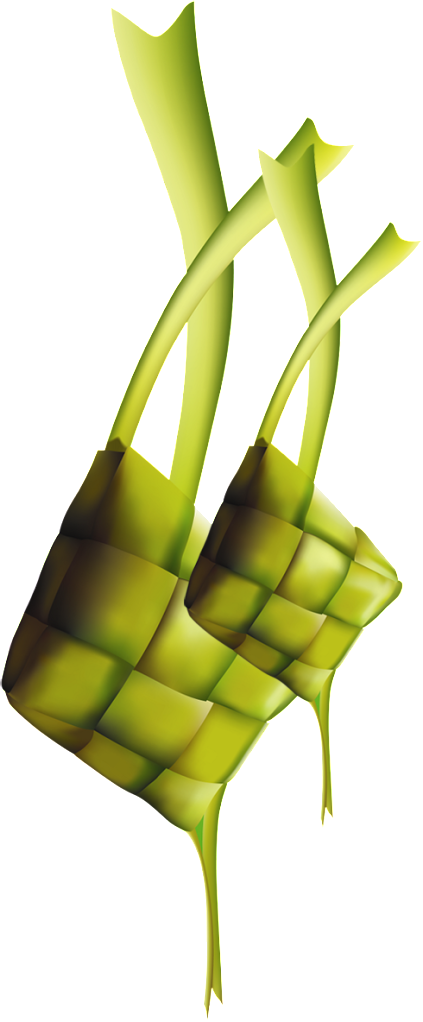
One of notable traditional food  at the Malay stall is the Ketupat. I was attracted to its unique design and I remembered seeing this design everywhere during Hari Raya! The lady here told me that it is a form of rice dumpling wrapped in a woven palm leaf and is commonly eaten with peanut sauce as a side dish to Satay. I love Satay! I then asked her how she prepared the Ketupat. She said it is very simple. All she has to do was to wrap rice in the palm leaf and boil it, and we will have yummy Ketupat! And since I am attracted to the design, I decided to find out more about it!


Turns out that there are several ways of wrapping Ketupat! The origins of the design is such that it allows moisture to dissipate while leaving the cooked rice to air dry. It was said that long before, this method was used to keep the sailors' food fresh for consumption and prevent insects from eating them during long sea expeditions! Never knew that people of the past were this creative! Maybe some day I will ask my mum to help me make one!

Nasi Padang

At the Malay store was also this wide selection of dishes called Nasi Padang. It has a similar concept to the mixed vegetables rice from the Chinese. However, most of the dishes there are spicy! I can't take food that are too spicy even though they all looked so delicious. The lady then told me this is one of the most iconic Malay dishes in Singapore. I thought to myself, I just got to share this with my class!


Doesn't it just look mouthwatering? I never knew we have such similar food as our Malay counterparts!

Naan

I love bread. And when I saw this food that looks like Roti Prata, I went to try it. Turns out it is not Roti Prata! It is similar to that, but is actually a type of flatbread called Naan. It smelled soooo good that I could not resist it.


Turns out that Naan is really similar to Roti Prata. It comes with different fillings like egg, cheese and onion. My house does not have an oven, hence I don't think I will be able to make one of these delicious bread at home ): 

Hainanese Chicken Rice

And for all my other Malay and Indian friends out there, this is my favourite Hainanese Chicken Rice! 


I have been eating this since I was young and I loved it ever since. The rice smells so good and the chicken is so tender! This chicken is cooked in a special broth from Hainanese origin which gives it the awesome aroma when presented to us. There are actually many origins to where Chicken Rice comes from. Even the Malays have their version of chicken rice, Nasi Ayam. There's unique version called Nasi Ayam Penyet, which means 'Smashed Chicken Rice'. Basically, the chicken is deep-fried and then smashed such that the bones can be easily removed for consumption!


I can never imagine a dish prepared in many different ways. This goes to show how much value each individual ethnic culture can bring to our large Singapore Community!

Tuesday, 17 July 2012


2nd Day of Racial Harmony Week: Costumes!


An array of traditional costumes

Today, the school is really colourful! All my friends came in different costumes, and all of them look so different. Yesterday, Mdm Nora showed us some photos of traditional costumes and today, I see some of my friends wearing them. My best friend, QiQi, was wearing a Cheong Sam. From what I learnt in class and the assembly talk, Cheong Sam is the traditional costume of the Chinese. It used to be widely worn by women, and represents the feminity a woman should possess. I also learnt that Cheong sam was first developed in Shanghai in the 1920s under the influence of Beijing styles then. I think the Cheong sam looks really pretty!

Cheong Sam

During recess, I saw my friend Bala, wearing a Baju Kurung. I see people wearing it when I visit my Malay friends for Hari Raya. I think it is the traditional costume of Malays and Baju Kurungs are normally tailor-made for the whole family using the same piece of fabric. I asked Bala about what he was wearing and he told me that Baju Kurung for the males is actually called a Baju Melayu, and Baju Kurung refers to the costume females wear. I didn't know that!


Baju Melayu


Baju Kurung

Then, during Math class just now, our teacher Mrs Ravi was wearing a very very beautiful Sari! It has many shiny beads on it and a long cloth drapes from one shoulder to the waist. I went to ask Mrs Ravi after class about her Sari, and she told me it is the traditional costume of Indians. Many people in India can be seen wearing the Sari and there are many different ways to drape the cloth of the Sari. Believe it or not, there are  80 recorded ways to wear a Sari! I would really love to try it on one day!


Sari

In conclusion, I really enjoyed Costumes day and have learnt a huge deal from talking to my peers of other races and looking up the information on my own :)

Monday, 16 July 2012

RACIAL HARMONY WEEK!

On the 21st of July every year, Singapore celebrates Racial Harmony Day. The celebration of this event is to commemorate the 1964 Racial Riots. This serves as a reminder to all of us how significant and important preserving peace and harmony between the races of Singapore is.

We need to appreciate the culture that each race brings to our multi-racial community. This week, in XiaoDingDong Primary School, we are going to explore and discover more about each races!


This is going to filled with lots of good food, games, activities and programmes!

So stay tuned!
 

Preserving Racial Ties Copyright © 2011 Designed by Ipietoon Blogger Template and web hosting